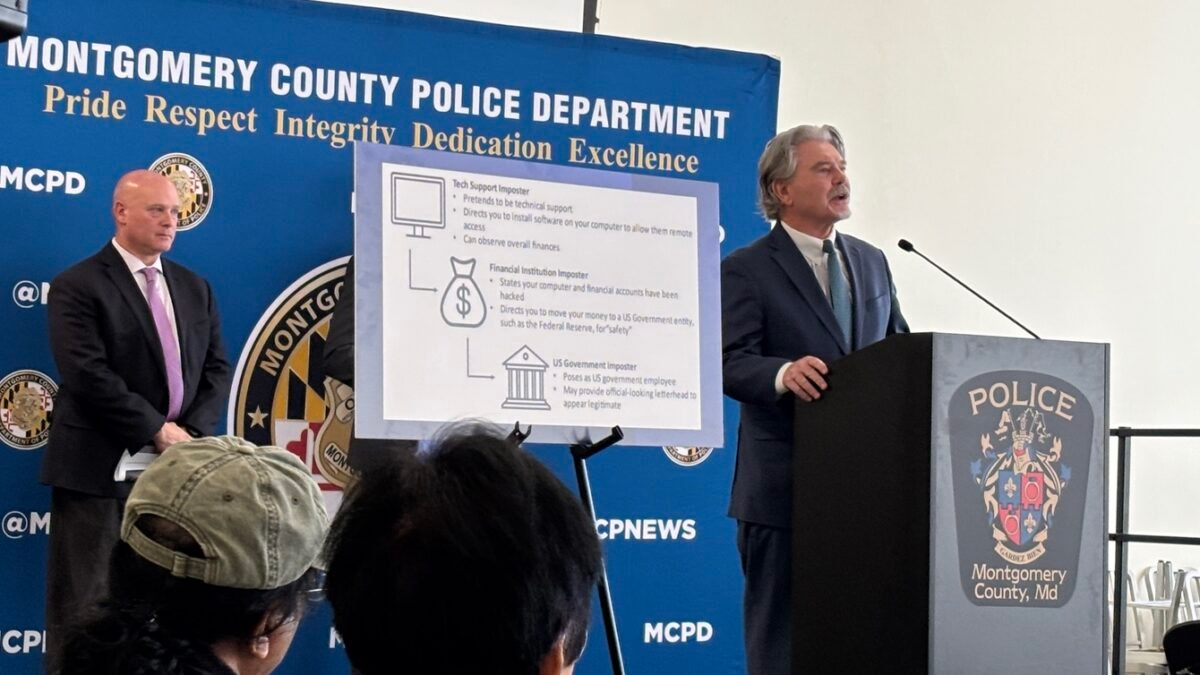
When a 58-year-old fraud victim told investigators in Maryland how she had been duped out of $1.7 million, they quickly realized she was not alone.
A year-long, expanding investigation revealed more than 650 victims targeted by the same three call centers in India, with reported losses exceeding $48 million.
Fraudsters posed as tech support workers to gain access to victims’ computers or described themselves as American law enforcement officials as part of elaborate impersonation schemes.
Key takeaways
- FBI and Indian authorities dismantled three India-based call centers tied to a $48 million fraud scheme.
- More than 650 U.S. victims were targeted through tech support and law enforcement impersonation scams.
- Fraudsters used phone calls, emails, popups, cryptocurrency, gold bars, and wire transfers to steal money.
- Six leaders were arrested in India, but officials said most victims are unlikely to recover lost funds.
Call centers dismantled in India
The probe led authorities in India to raid the call centers on December 11 and 12. According to India’s Central Bureau of Investigation, the operations were dismantled, six leaders were arrested, and laptops, cellphones, other devices, and cash were seized.
Maryland officials said victims will probably never see their money again, showing how difficult recovery can be once funds move through scam networks.
How the scams started
Investigators described how workers at the call centers searched for American targets through email, text messages, phone calls, and computer pop-up warnings.
Some scammers pretended to be tech support workers from companies such as Microsoft or Apple and persuaded victims to download software onto their computers.
Others claimed to be calling from the U.S. Social Security Administration, warning victims that criminals were using their Social Security numbers for money laundering, drug trafficking, or other serious crimes.
Impersonating U.S. law enforcement
Terrified victims were often transferred to someone pretending to be from U.S. law enforcement agencies such as the FBI or Drug Enforcement Administration.
The goal was to convince victims that their money was not safe in the bank and had to be moved for safekeeping to the FBI, DEA, or even the U.S. Treasury Department.
Victims were then pushed to route money to specific bank accounts, purchase and transfer cryptocurrency, buy gold bars for a supposed government agent to collect, or send cash.
Fear, secrecy, and psychological pressure
Investigators described the scams as an art of making people believe the caller is someone they are not. The fraudsters relied on fear, authority, and emotional pressure.
Another central part of the scam was convincing victims to keep their money movements secret, supposedly to avoid alerting criminals who already knew about them.
Some victims were threatened with what appeared to be genuine arrest warrants if they hesitated or questioned the instructions.
How investigators traced the network
The 58-year-old victim reported the fraud to Montgomery County detectives, who had already arrested several gold-bar scammers working in Maryland, some with ties to Indian call centers.
She provided investigators with bank account numbers, email addresses, phone numbers, and other data linked to the people she had been dealing with.
Investigators worked closely with the FBI’s Internet Crime Complaint Center, gradually linking her details with other victims in Maryland and across the United States.
Cooperation with Indian authorities
U.S. and Montgomery County investigators presented their case to Indian authorities through an FBI agent stationed in Delhi who was focused on scam call center investigations.
Before authorities in India could search the call centers, they needed sworn statements from at least two U.S. victims. Investigators were able to provide those statements.
The raids took place in Noida, Delhi, and Kolkata, according to authorities.
Highly organized fraud operations
Indian authorities said the accused individuals operated under pseudonymous identities of U.S. government officials from agencies including the Drug Enforcement Administration, FBI, and Social Security Administration.
Investigators said the call centers sold each other lists of potential American targets with phone numbers and email addresses.
The operations were described as competitive environments, with quotas posted on the walls.
A difficult recovery picture
Officials said it remains very difficult to recover stolen money once victims have sent funds through bank transfers, cryptocurrency, gold purchases, or cash shipments.
Even so, investigators said dismantling the three call centers can help prevent additional scams and reduce the ability of these networks to keep targeting victims.
Saw something suspicious?
Search or report a suspicious firm, website, email, or phone number.
If you were contacted by a suspicious investment platform, recovery agent, broker, or call centre, preserve evidence and check the entity before sending more money.